


Introduction
A wallet’s job has never actually been to hold money — it’s to hold proof of ownership over money. A leather wallet holds cash and cards; a crypto wallet holds the cryptographic keys that prove a specific amount of cryptocurrency belongs to you on the blockchain. The coins themselves never actually “live” in the wallet at all — they live on the blockchain, and the wallet just proves you control them. In this article, we’ll look at what a crypto wallet actually stores, the real difference between custodial and non-custodial wallets, and why “not your keys, not your coins” became such a common warning.

What a Crypto Wallet Actually Stores
A crypto wallet stores two cryptographic keys: a public key, which works like an account number others can send funds to, and a private key, which works like the signature that authorizes spending. Whoever holds the private key controls the funds, in full — there’s no separate identity check, no password reset, no customer support line. That’s a fundamentally different security model than a bank account, and it’s the source of both crypto’s independence and its unforgiving nature.
Hardware Wallets: Keys That Never Touch the Internet
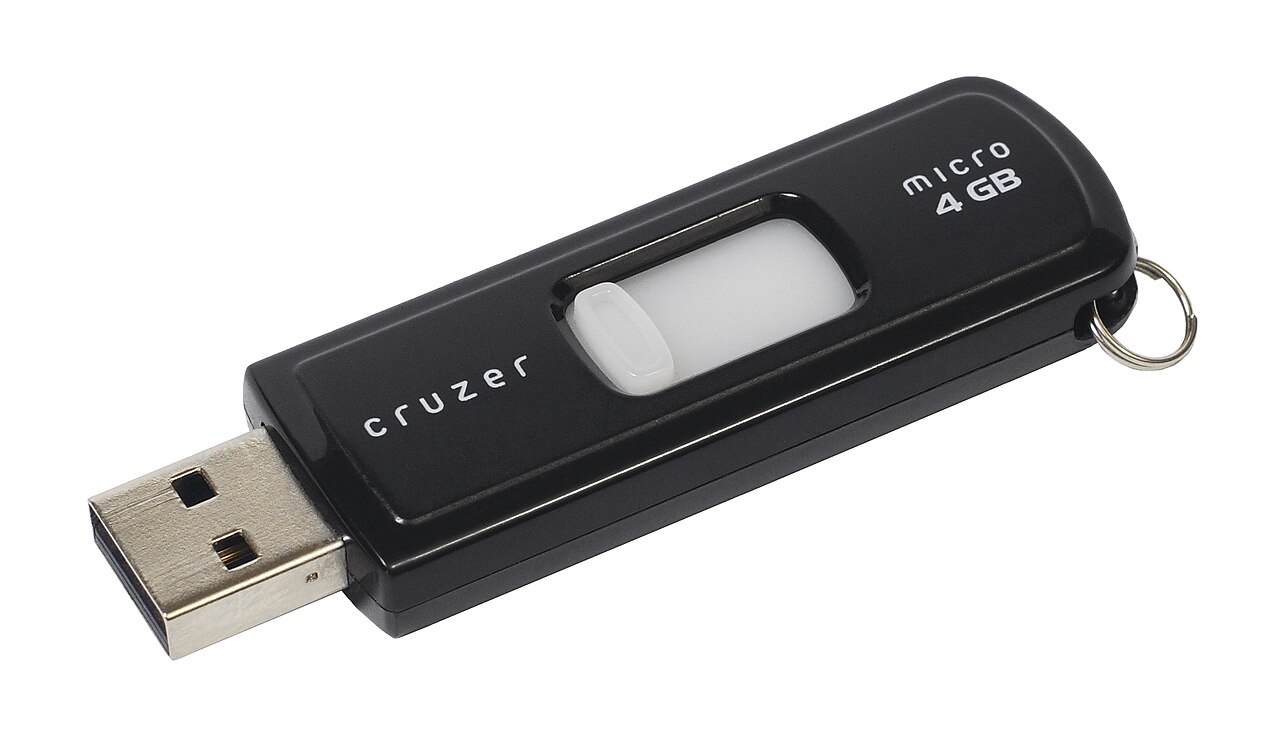
A hardware wallet is a small physical device, often not unlike the USB drive shown here, purpose-built to store private keys completely offline. Transactions are approved on the device itself, meaning the keys never get exposed to an internet-connected computer that could be hacked. This “cold storage” approach is widely considered the most secure way to hold significant cryptocurrency, precisely because it removes the internet as an attack surface entirely.
Custodial vs. Non-Custodial: Who Actually Holds the Keys
A custodial wallet — the kind most exchanges provide by default — holds your private keys on your behalf, similar to how a bank holds your money. It’s convenient and forgiving of mistakes, but it means trusting that company completely. A non-custodial wallet puts the keys directly in your hands: more control, but also full responsibility. Lose the private key or the recovery phrase for a non-custodial wallet, and there is genuinely no one to call — this is exactly where the phrase “not your keys, not your coins” comes from, and why it’s repeated so often.
Wallets Are Becoming Everyday Infrastructure
The word “wallet” has already quietly expanded to cover mobile payment apps that tap to pay at a counter like this one — proof that the concept of a digital stand-in for a physical wallet has moved well beyond crypto and into mainstream daily life. Crypto wallets are simply the same idea applied to a different, blockchain-based kind of value.
The Bottom Line
A wallet, crypto or otherwise, isn’t really a container — it’s a proof-of-ownership tool, and the level of control you have over that proof determines both your independence and your responsibility. Understanding whether you’re using a custodial or non-custodial wallet, and treating a private key with the seriousness it deserves, is the single most practical piece of crypto security advice worth internalizing.
ESPADMAG – A Place to: Mindset Achieve Greatness!
Photo credits: Laura Mason (CC BY-SA 2.0); Evan-Amos (Public domain); HLundgaard (CC BY-SA 3.0); zaphad1 (CC BY 2.0) — via Wikimedia Commons.
