


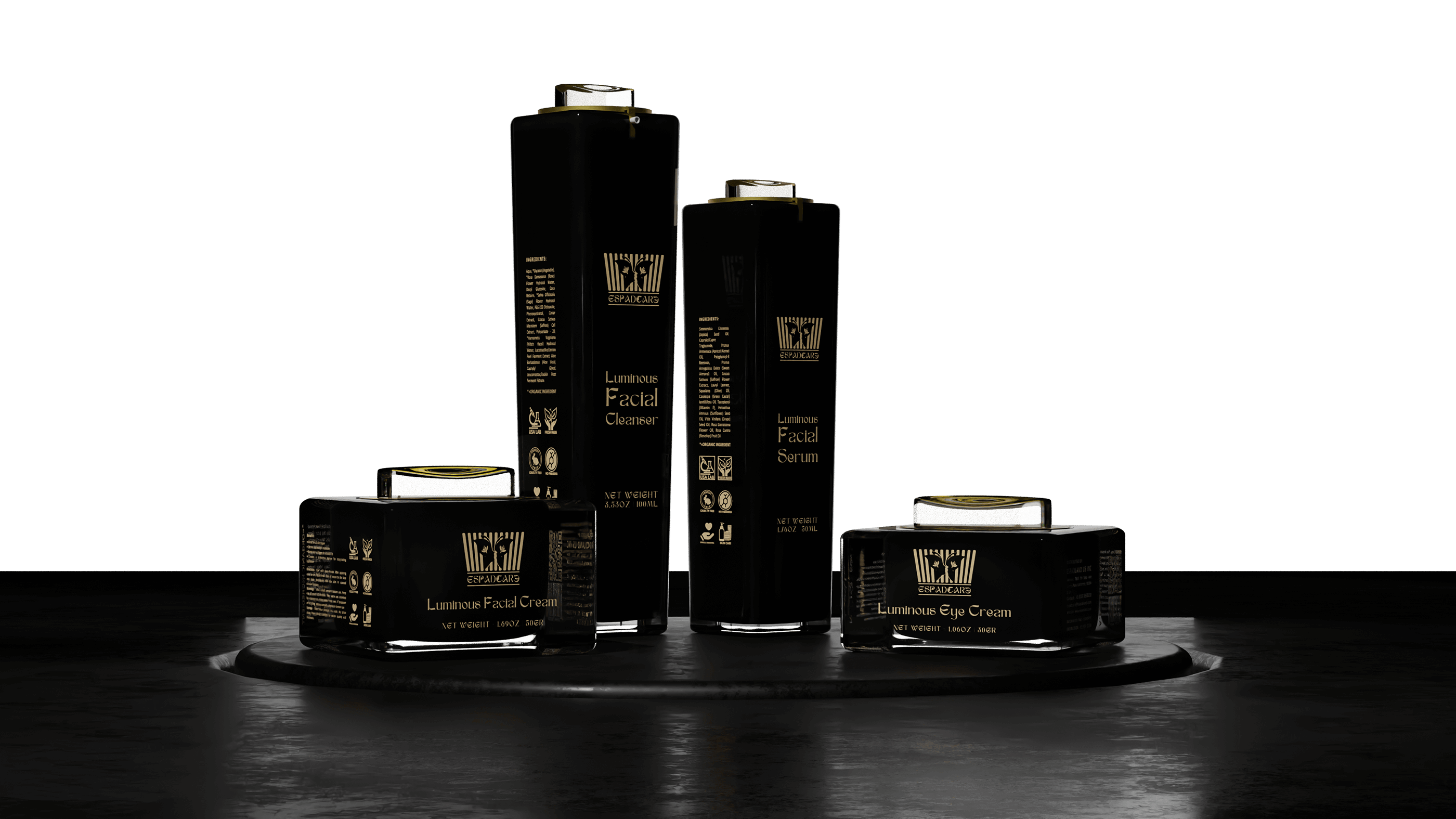
ESPAD CARE Luminous is a four-product skincare line by ESPADLAND: a facial cleanser, a facial serum, a facial cream and an eye cream, made in the USA. This guide explains what the main ingredients on each label are and the cosmetic job each one does in the formula. The complete INCI lists are published on the ESPAD CARE ingredients page.
Ingredient lists on cosmetics use INCI names (International Nomenclature of Cosmetic Ingredients), the standard names used on labels in many countries. Ingredients are listed in descending order of concentration, so the first few usually make up most of the product. Below, we group the Luminous ingredients by the role they play. This is a guide to cosmetic function only; it is not medical advice, and no ingredient list can promise a particular result for your skin.
The five main ingredients of the Luminous line
ESPAD CARE builds the Luminous line around five main ingredients. Which product contains each one is taken straight from its INCI list:
- Saffron stem cells (Crocus Sativus Meristem Cell Extract): a plant cell extract from saffron, in the Luminous Facial Cleanser, the Luminous Facial Cream and the Luminous Eye Cream. The Luminous Facial Serum uses saffron flower extract instead. Read more in Saffron: The Golden Secret to Radiant Skin.
- Caviar extract: in the cleanser, the facial cream and the eye cream. The serum uses Caulerpa Lentillifera (Green Caviar) Oil, an oil from a sea grape seaweed also called green caviar. Read more in Caviar: The Secret to Your Radiant Skin.
- Hyaluronic acid (as Sodium Hyaluronate, the salt form): a humectant that helps bind water, in the facial cream and the eye cream.
- Rose extract (Rosa Damascena Flower Hydrosol Water): rose flower water, the one botanical listed in all four products. The serum also contains Rosa Damascena flower oil.
- Almond oil (Prunus Amygdalus Dulcis Oil): an emollient plant oil in the serum, the facial cream and the eye cream.
The facial cream and the eye cream contain all five. All other ingredients below are the important supporting ingredients from the products’ safety data sheets (MSDS).
The base: water and glycerin
- Aqua (water) is the first ingredient in the cleanser, the facial cream and the eye cream. It is the base in which the other ingredients are dissolved or dispersed.
- Glycerin is a humectant: it attracts water and helps the product keep skin feeling moisturized. It appears in all four products.
- Hamamelis Virginiana (Witch Hazel) Hydrosol Water is a plant water used in the cleanser, the facial cream and the eye cream.
Other signature ingredients
- Crocus Sativus (Saffron) Flower Extract is in the serum, the facial cream and the eye cream, alongside the saffron stem cells.
- Lactobacillus/Lemon Peel Ferment Extract is a ferment of lemon peel, used in the cleanser and the facial cream.
Plant oils and butters (emollients)
Emollients soften and smooth the skin’s surface and help reduce water loss. The Luminous serum is built mainly on plant oils, while the creams combine oils with butters:
- Simmondsia Chinensis (Jojoba) Seed Oil (serum, facial cream)
- Prunus Armeniaca (Apricot) Kernel Oil, Vitis Vinifera (Grape) Seed Oil, Squalane (Olive) Oil and Rosa Canina (Rosehip) Fruit Oil (serum)
- Helianthus Annuus (Sunflower) Seed Oil (serum, facial cream, eye cream)
- Passiflora Incarnata (Passion Fruit) Seed Oil (facial cream)
- Butyrospermum Parkii (Shea Nut) Butter (facial cream, eye cream) and Mangifera Indica (Mango) Seed Butter (eye cream)
- Oenothera Biennis (Evening Primrose) Oil and Daucus Carota Sativa (Carrot) Seed Oil (eye cream)
- Caprylic/Capric Triglyceride and Lauryl Laurate (serum) and Coco Caprylate/Caprate (eye cream), lightweight emollients
Moisture helpers
- Sodium PCA is a humectant that helps bind water, in the facial cream and the eye cream, next to the hyaluronic acid described above.
- Aloe Barbadensis (Aloe Vera) appears as a leaf extract in the cleanser and as leaf juice in the eye cream.
- Beta Glucan is in the facial cream.
Antioxidant: vitamin E
Tocopherol is vitamin E. In cosmetic formulas it acts as an antioxidant that helps protect the oils in the product from going rancid. It is in the serum, the facial cream and the eye cream.
Cleansing agents
- Coco Betaine is a mild surfactant derived from coconut that helps lift dirt and makeup so they can be rinsed away. It is listed in the cleanser and the serum.
- PEG-150 Distearate is used as a thickener; it is listed in the cleanser and the serum.
- Salvia Officinalis (Sage) Flower Hydrosol Water is a floral water in the cleanser.
Texture: emulsifiers and thickeners
Creams are emulsions of water and oil, and they need ingredients that hold the two together and give the right feel:
- Glyceryl Stearate, Cetearyl Alcohol, Cetyl Alcohol, Polysorbate-20 and Sodium Stearoyl Lactylate help water and oil mix and stay mixed. Note that cetearyl and cetyl alcohol are fatty alcohols; they are not the drying kind of alcohol.
- Xanthan Gum thickens, and Euphorbia Cerifera (Candelilla) Wax and Polyglyceryl-3 Beeswax add body.
Keeping the product fresh
Water-based products need preservation to stay safe in use. The cleanser, the facial cream and the eye cream use Phenoxyethanol, Caprylyl Glycol and Leuconostoc/Radish Root Ferment Filtrate, and the two creams add Tetrasodium Glutamate Diacetate, which binds metal ions and helps keep the formula stable.
Eye cream extras
The eye cream also contains Salix Alba (Willow) Bark Extract, Caffeine and Phospholipids. It is applied in small dabs under the eyes and on the lid up to the brow, as the product directions explain.
How to use the line in order
The product directions give the order: cleanser first, then the serum, then the facial cream, with the eye cream around the eyes. Our step-by-step guide is How to Correctly Use Espadcare Luminous. The four products are also sold together as the Luminous Package.
Patch test first
Even well-tolerated ingredients can bother some people. Before first use, apply a small amount to a small area, such as the inside of the forearm, and wait to see how your skin reacts. Read the warnings and storage advice on each product page, and if you have a skin condition or a known allergy, check the full INCI list with your doctor or pharmacist.
Related guide: ESPAD CARE Luminous Routine: Step by Step, Morning and Evening
The complete INCI list of the cleanser, serum, facial cream and eye cream is published on the ESPAD CARE ingredients page, as shown in each product’s safety data sheet.
Rose flower. Rosa Damascena (Rose) Flower Hydrosol Water is listed in all four products, and the serum also contains Rosa Damascena flower oil.
Yes. The serum list starts with Aqua and glycerin, followed by rose flower water and a blend of plant oils such as jojoba, apricot kernel, sweet almond and green caviar oil.
The creams contain cetearyl alcohol and cetyl alcohol. These are fatty alcohols used to give texture and help emulsify the cream; they are not the same as drying alcohols such as ethanol.
ESPAD CARE Luminous products are made in the USA. They are sold in the ESPADLAND online shop.



[…] vitamin E in the creams. The complete lists are on the ESPAD CARE ingredients page, and our guide ESPAD CARE Luminous Ingredients Explained explains what each one […]
[…] If you plan to buy the Luminous Package for yourself, compare the three card pages and choose the one whose benefit fits your order. Plan the timing too: the card runs for 90 days from purchase, and your discount code must be used within 48 hours of receiving it. To learn about the products first, read ESPAD CARE Luminous Ingredients Explained. […]