


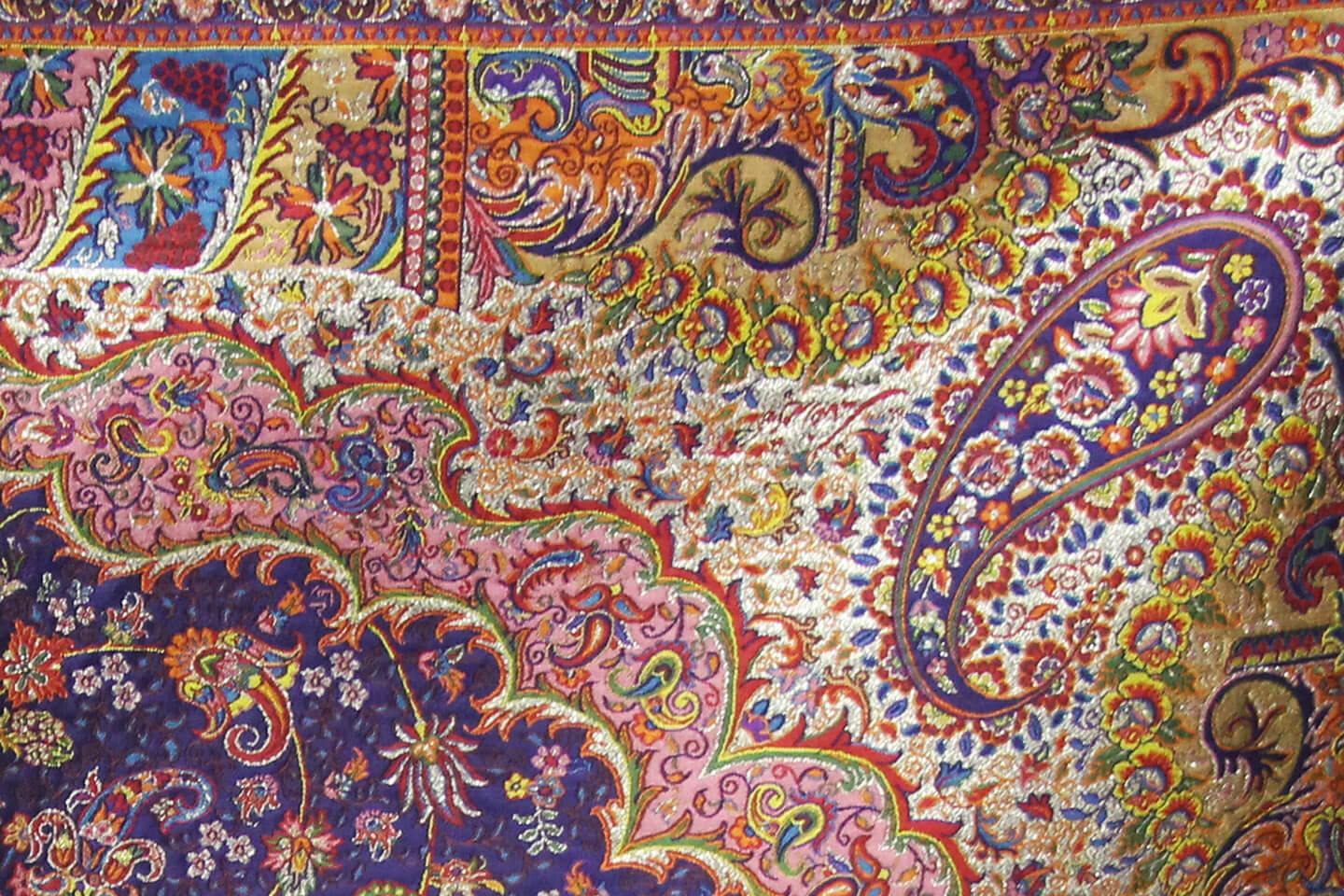
Termeh is a fine, densely woven textile with rich, colorful patterns, woven on a hand loom from wool, silk or a blend of the two. It is one of the textile crafts featured in the ESPAD HAND craft guides. This article explains what termeh is, how to use it around the home, and how to wash, store and look after it so it lasts for years.
For the history and the weaving process in more depth, read Termeh: A Symphony of Silk and Texture in ESPADMAG and the short Termeh Weaving guide in the ESPADLAND shop, which also includes a short video of the craft.
What is termeh?
Termeh is woven from two sets of threads: the warp, which runs along the length of the fabric, and the weft, which is passed across it from side to side. Its pattern is not printed, painted or embroidered on top of the cloth. It is woven into the fabric itself, thread by thread, so the design is part of the structure of the textile. This is why the back of the fabric shows the same design in reverse, and why a well-made piece keeps its pattern through many years of use.
Termeh is sometimes called cashmere fabric, because fine wool gives it its soft feel. Today some pieces are also woven with cotton or blended threads, which are lighter and easier to wash, while the patterns and the weaving method stay the same.
Fibers and their feel
- Wool: warm, soft and slightly matte; it holds dye well and gives termeh its classic, rich handle.
- Silk: smooth, strong and glossy; colors look brighter and the fabric has a light sheen.
- Wool and silk blends: the softness of wool with some of the shine of silk.
- Cotton and blended threads: lighter and easier to care for, a practical choice for everyday tablecloths.
Patterns and colors
Termeh is known for dense, all-over designs that leave very little background visible. The most familiar motif is the paisley, a curved teardrop shape that appears in rows, in large medallions or in small repeating groups. Other common designs are flowering branches, climbing vines, birds among leaves and geometric frames. Classic pieces use deep, warm colors such as red, burgundy, dark green, navy and black, with lighter accents in cream, gold, orange and turquoise.
How to use termeh at home
Because termeh is both decorative and durable, it has many uses:
- Tablecloths and table runners for special occasions and family gatherings. Measure the table first and allow the fabric to hang over the edges.
- Covers for side tables, chests, pianos and the fronts of furniture.
- Cushion covers, wall hangings and framed panels. For a wall piece, choose a design whose central motif you like, because it will be seen from a distance.
- Covers for books, albums, boxes and keepsakes.
Think about the colors of the room as well. Deep reds and dark greens give a warm, traditional look, while lighter grounds feel softer and more modern. Termeh also sits well next to other handmade pieces; an enamel vase and plate set on a termeh runner is a classic combination.
How to recognize hand-woven termeh
Machine-made fabrics with termeh-style patterns are common, and some are attractive and practical. If you want hand-woven termeh, check these points:
- The back: woven termeh shows the pattern in reverse, with many short floating threads; on hand-woven pieces it is neat but not perfectly uniform.
- Density: hold it up to the light; very little light should pass through.
- Weight and handle: hand-woven termeh feels firm, heavy for its size and soft at the same time.
- Small irregularities in shapes and lines are normal in handmade work.
- Edges should be tidy and firm, without loose threads.
Washing and cleaning
- Dry cleaning is the safest way to clean termeh, especially wool and silk pieces.
- If you wash it at home, use cold water and a mild detergent for delicate fabrics. Wash by hand and move it gently in the water; do not rub, wring or twist it.
- Rinse well in cold water, press out the water with a towel and dry it flat in the shade. Direct sunlight can fade the colors.
- Iron it on the reverse side at a low temperature, with a thin cotton cloth between the iron and the fabric.
- Blot spills right away with a clean, dry cloth; do not rub them into the fibers.
Storage
- Store termeh folded loosely or rolled around a tube, in a dry and dark place.
- For wool pieces, use a natural moth repellent such as cedar.
- Refold it now and then along different lines, so the same folds do not wear the fibers.
Why handmade termeh is worth the care
A skilled weaver may finish only a few centimeters of fabric in a full day, and setting up the loom for a complex pattern can take days. Every hand-woven piece therefore carries many hours of work, and no two pieces are exactly the same. Looked after well, termeh can be used for many years and passed on as a family piece.
Frequently asked questions
It is not recommended. Dry cleaning is safest, especially for wool and silk. If you wash it at home, wash it gently by hand in cold water with a mild detergent and dry it flat in the shade.
Termeh is sometimes called cashmere fabric because fine wool gives it its soft feel. The name describes the feel of the fabric, while termeh refers to the woven textile and its patterns.
Fold it loosely or roll it around a tube, keep it in a dry and dark place, use a natural moth repellent such as cedar for wool pieces, and refold it now and then.
Look at the back. Woven termeh shows the pattern in reverse with short floating threads, while a printed fabric does not show a woven pattern on the back.


