


Introduction
A crypto airdrop borrows its name from exactly the image you’d expect: something valuable dropping down to people, unrequested, from above. In practice, it means a blockchain project distributing free tokens directly into people’s wallets, usually to build an early user base, reward loyal supporters, or spread awareness of a new coin. It’s one of the more genuinely generous-looking tools in crypto marketing — and also one that attracts a fair share of scams riding on that generosity. In this article, we’ll look at why projects actually give away free tokens, the logistics behind a real one, and how to tell a legitimate airdrop from a trap.
Why Projects Actually Give Tokens Away
Giving away something with real value sounds counterintuitive as a business move, but it solves a genuine problem: a brand-new token is worthless without people actually using it. An airdrop jumpstarts that usage instantly, rewards people who supported the project early — often by simply holding a related token or using a related app — and generates word-of-mouth attention that’s hard to buy through advertising alone. The tokens given away are usually a small fraction of a much larger total supply, funded by the project’s own treasury.
The Real Logistics Behind a Distribution

Just like the careful preparation behind a real-world aid drop pictured here, a legitimate crypto airdrop involves real planning: a snapshot of eligible wallet addresses is taken at a specific point in time, eligibility rules are set (often based on past activity), and tokens are distributed automatically through a smart contract rather than handed out manually one by one. None of that requires you to send anything or share private keys — which is exactly where most airdrop scams try to insert themselves.
Free Money Really Does Get Given Away

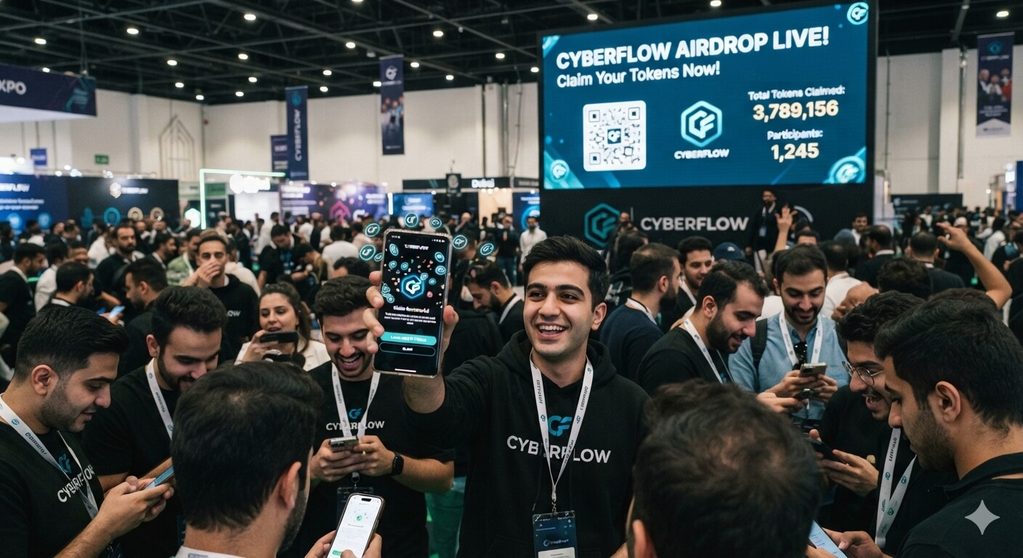
Events like this one prove the basic idea isn’t unique to crypto — sometimes free money genuinely is given away, no catch attached. Legitimate crypto airdrops work on the same principle: the project absorbs the cost as a marketing expense, and recipients genuinely receive value for doing very little. The challenge is that this same generous premise is exactly what scammers imitate to lower people’s guard.
Telling a Real Airdrop From a Trap
- A real airdrop never asks for your private key or seed phrase. Receiving free tokens never requires giving up control of your wallet.
- Be suspicious of any airdrop requiring an upfront payment. Legitimate distributions don’t charge a “claim fee” before releasing tokens — though a small, transparent blockchain network fee to move real tokens can be normal.
- Verify through the project’s official channels. Confirm any airdrop announcement directly on the project’s verified website or social accounts, not through a random message or ad.
- Be wary of connecting your wallet to unfamiliar sites. A malicious site can be designed to drain a connected wallet rather than deposit anything into it.
The Bottom Line
An airdrop is, at its most honest, a marketing expense dressed up as a gift — and legitimate ones really do hand out free value with no hidden cost. The skill worth building isn’t cynicism about all airdrops, but the specific habit of checking who’s actually giving something away and what, if anything, they’re quietly asking for in return.
ESPADMAG – A Place to: Mindset Achieve Greatness!
Photo credits: U.S. Army photo by Spc. Micah E. Clare (Public domain); U.S. Air Force AFCENT (Public domain); freemoneyday (CC BY 2.0); U.S. Navy photo by Robert Palomares (Public domain) — via Wikimedia Commons.
