


Introduction
Augmented reality doesn’t replace the world in front of you the way virtual reality does — it adds to it, overlaying digital information directly onto your view of real surroundings. A phone camera showing furniture placed in your actual living room, a heads-up display showing a pilot’s altitude without looking down, a technician seeing repair instructions layered over the real engine in front of them — all of it is the same basic idea: keep the real world visible, and enhance it with exactly the right information at exactly the right moment. In this article, we’ll look at how AR actually works, where it’s already proven itself, and why it’s spent so long being “almost mainstream” without fully arriving.

How AR Actually Works
An AR system has to solve a genuinely hard problem: understand the real, physical space around you well enough to place digital objects into it convincingly, and keep those objects appearing to stay in place as you move. It does this through cameras and sensors that map surfaces and track motion in real time, then renders digital content that responds to that mapping instantly enough to feel physically present rather than pasted on top like a sticker.
Where AR Already Proves Its Worth
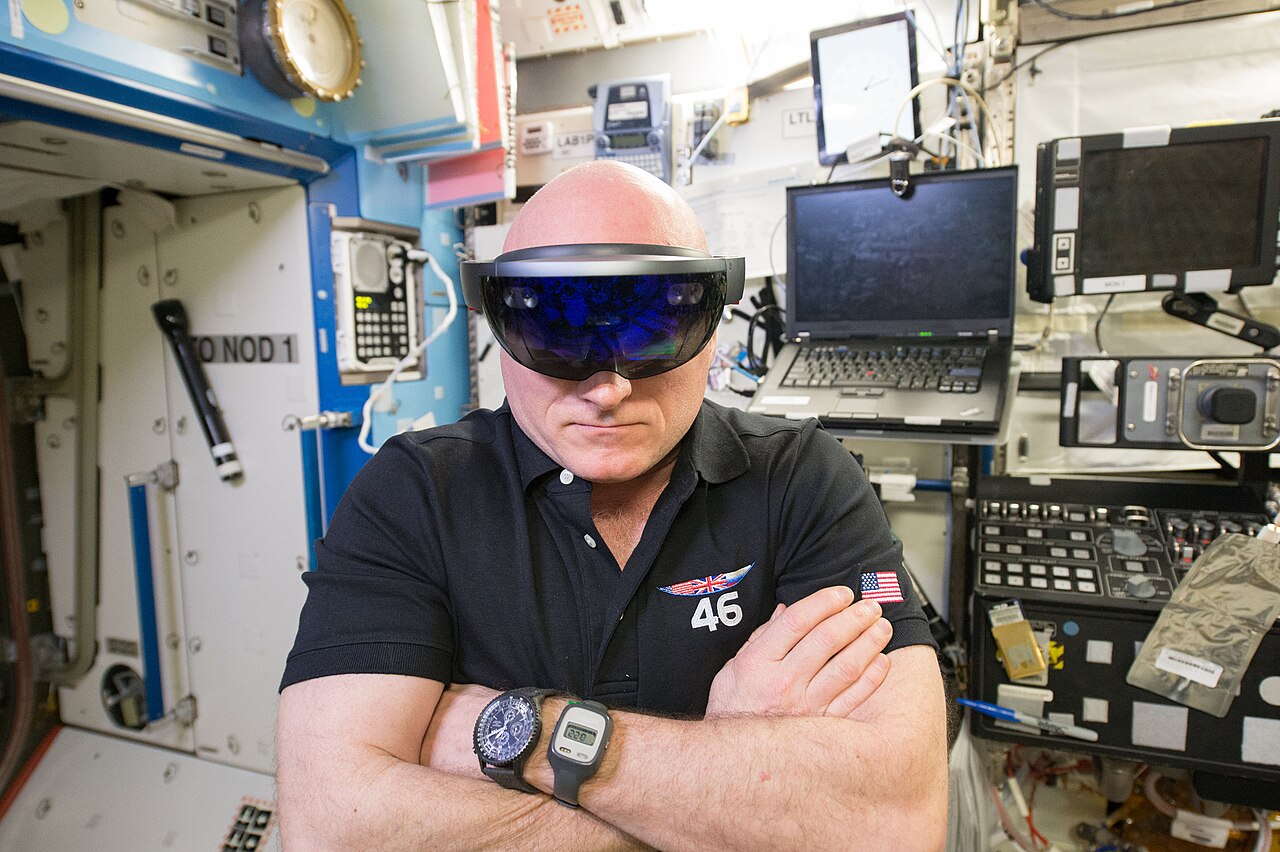
NASA has actually tested AR headsets aboard the International Space Station, letting astronauts see step-by-step repair instructions overlaid directly onto the equipment in front of them instead of flipping through a manual with their hands already full. That same principle — hands-free instructions layered onto real equipment — has proven itself in surgery, warehouse picking, and industrial maintenance, wherever looking away from the task at hand to check a screen or manual creates real risk or wasted time.
Military and Field Testing

Military research programs have tested AR extensively for exactly the same reason civilian industries have: it can overlay navigation, targeting data, or equipment diagnostics directly into a person’s field of view without forcing them to look down at a separate screen. Programs like the one shown here treat AR as a serious tool for situations where attention genuinely cannot be split between a task and a device.
Why It’s Taken So Long to Go Mainstream
Consumer AR has mostly lived in phone apps — furniture placement, social media filters, navigation overlays — because dedicated AR glasses still struggle with battery life, field of view, and simply looking normal enough for everyday public use. The gap between a research headset that works brilliantly in a lab or a spacecraft and a pair of glasses someone would wear comfortably all day remains the field’s biggest unsolved design problem.
The Bottom Line
Augmented reality already works well in specific, high-value situations — space stations, operating rooms, warehouses, and battlefields — where hands-free, real-time information genuinely changes outcomes. Getting it into everyday pockets and faces as comfortably as a phone in a pocket is still a hardware problem more than a software one, and it’s the piece still standing between today’s demos and tomorrow’s daily habit.
ESPADMAG – A Place to: Mindset Achieve Greatness!
Photo credits: NASA Kennedy / Charles Babir (Public domain); NASA (Public domain); John Williams (Public domain); U.S. Navy photo by Daniel J. McLain (Public domain) — via Wikimedia Commons.
